
Blog
Marmorino Plaster in Miami: Why Interior Designers Specify This Mineral Finish

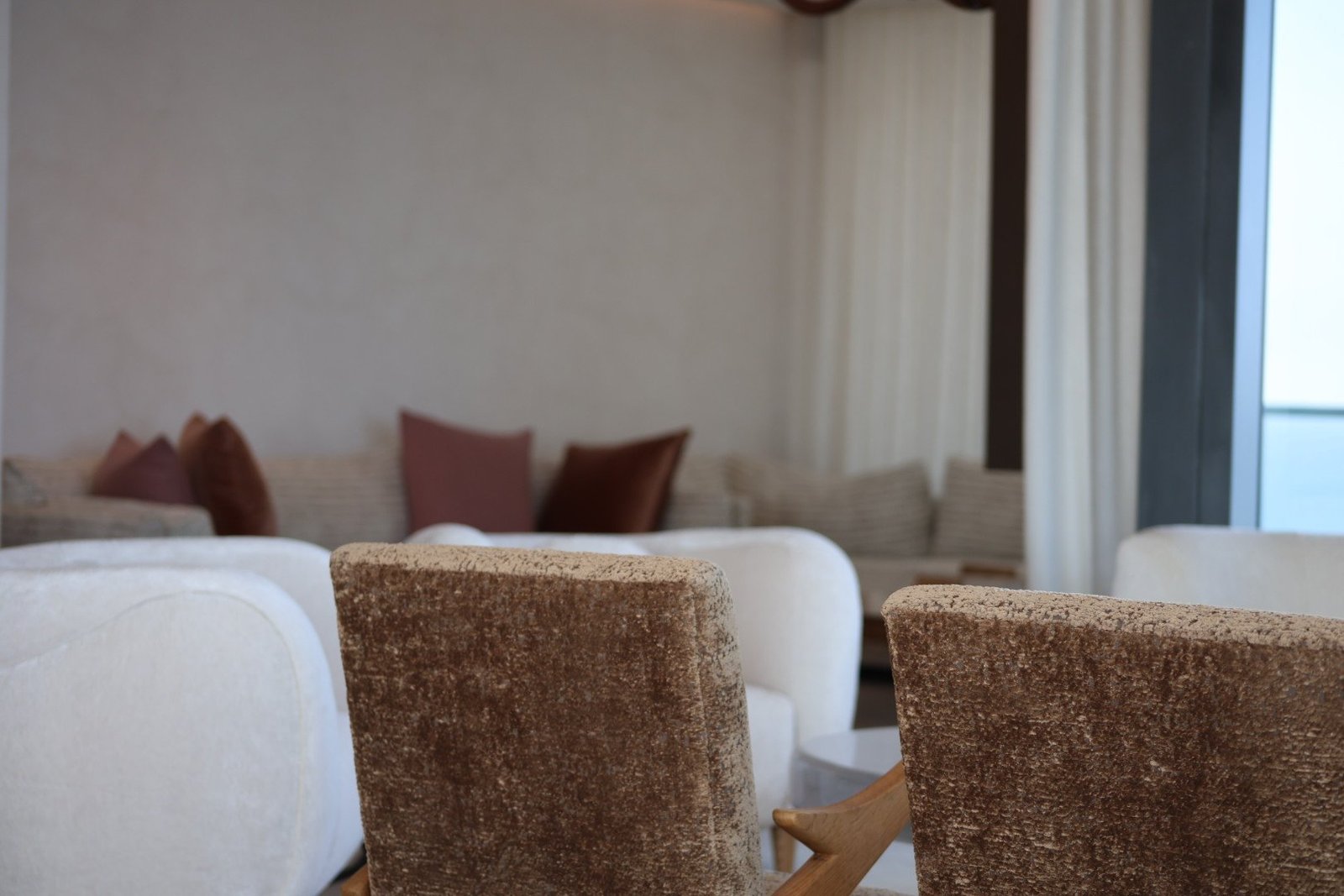
Walk through a recently finished residence or boutique hospitality project in Miami and there is a good chance the walls are not painted. More and more, interior designers and architects are specifying mineral lime finishes, and Marmorino is one of the materials they return to most often. It reads as calm and natural on a mood board, it photographs beautifully, and it gives a space the quiet, handcrafted depth that clients increasingly ask for.
This guide is written for design professionals. It covers why designers choose Marmorino plaster in Miami, what the material actually is, which finishes are available, where it performs best indoors, how it should be maintained, and how to specify it with Du-All Microcement from concept to installation.
What Marmorino is, in specification terms
Marmorino is a traditional Italian lime plaster. Our Natural Marmorino is made from aged slaked lime, ultra-fine marble powder and mineral pigments. It is applied by hand with a steel trowel in thin layers, and the final appearance depends on how the applicator works and compacts the last coat.
Unlike a film-forming paint, a lime plaster cures by slowly reacting with carbon dioxide in the air and returning toward a stone-like state. That is why Marmorino has depth rather than a flat surface color: light moves through subtle variations in tone and texture instead of bouncing off a uniform coating.
Why interior designers in Miami keep specifying it
A mineral material, not a coating
For designers working on wellness-oriented homes, spas and hospitality spaces, the material story matters. Marmorino is lime and marble, colored with mineral pigments. It fits naturally into projects built around natural materials such as stone, oak, linen, travertine and unlacquered brass.
Breathability
Lime-based Marmorino is vapor-permeable, depending on the product and the protective treatment selected. Water vapor can pass through the finish instead of being trapped behind a plastic film. That is a meaningful quality in a humid, coastal city, but it is not a substitute for good design: it does not eliminate condensation, leaks or the risk of mold, so ventilation, substrate preparation and correct product selection remain essential.
Low-VOC by nature
Lime plasters are mineral-based, which is why they are often chosen for projects with indoor air quality goals. When your project has a specific VOC requirement or a certification target, request the technical data sheet for the exact product and any sealer or wax being used, and we will provide the documentation for your specification package.
A palette that matches the moment
Miami interiors are moving toward warm earth tones: sand, clay, bone, terracotta, mushroom and soft taupe. Mineral pigments in a lime base render these colors with a softness that is hard to achieve with paint.
It works in many design languages
Marmorino can be quiet and minimal or rich and expressive. It sits comfortably in contemporary, Mediterranean, coastal, Japandi and wabi-sabi interiors, which makes it a reliable material across very different client briefs.
Finishes you can specify
The same material can produce very different surfaces. When briefing us, describe the effect you want, and we will match it with samples:
- Matte and velvety. A soft, chalky, stone-like surface with gentle tonal movement. Ideal for minimalist interiors and large wall planes.
- Satin. A light compaction that adds a subtle sheen and makes the surface feel more refined.
- Polished. A highly compacted finish with a marble-like glow, often chosen for entries, feature walls and hospitality spaces.
- Protected finishes. Waxes or sealers can be added where a wall needs more resistance to marks or splashes. The choice of protection affects both appearance and breathability, so it belongs in the specification, not on site.
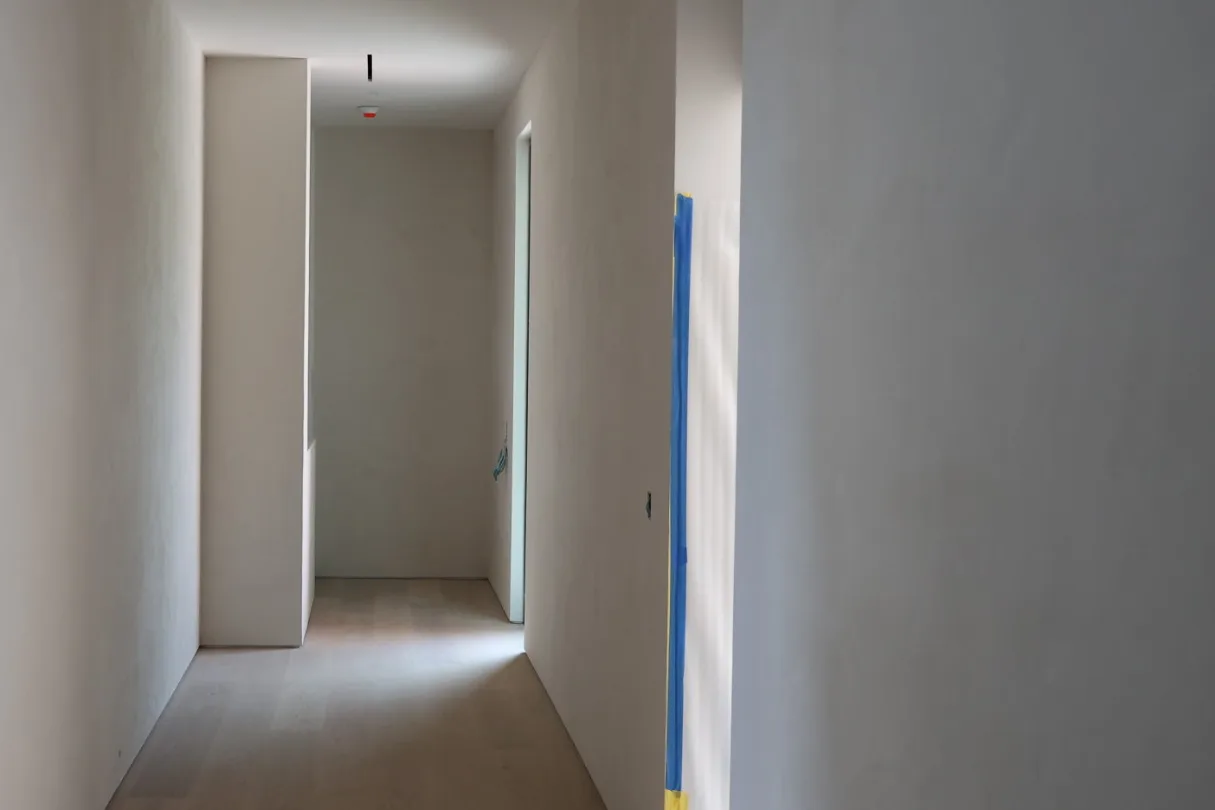
The image at the top of this article shows the kind of quiet, light mineral wall surface that lime finishes are known for: soft tonal variation, clean planes and no visible joints, set against a natural wood floor.
Where to use Marmorino indoors
- Living rooms and hallways for depth and movement along long wall planes.
- Bedrooms for a warm, soft, restful atmosphere.
- Bathrooms and spas on walls outside direct water contact, when properly sealed.
- Kitchens and dining rooms to add refined Italian character.
- Fireplaces, feature walls, columns and ceilings where a seamless, architectural look is the goal.
- Offices, boutiques and showrooms that need a timeless, high-end backdrop for products and people.
For areas with direct and constant water exposure, such as shower interiors, we usually recommend a different system. Tadelakt is designed for hammam-style wet areas, and microcement is the performance choice for floors and showers. Combining them with Marmorino in the same project keeps the palette cohesive while each surface does its job.
Maintenance: what to tell your clients
- Dust or wipe gently with a soft, slightly damp cloth.
- Avoid harsh chemicals, solvents and abrasive pads, which can damage the surface or its protection.
- Small marks can often be softened; local repairs blend more easily on lime than on paint, although an exact match always depends on the original finish.
- Protected areas may need their wax or sealer renewed over time; we advise on the right product and interval for each project.
- Expect natural variation. Subtle tonal shifts are part of a handcrafted finish, not a defect, and setting that expectation early avoids surprises.
How to specify Marmorino with Du-All
- Share the brief. Send drawings, a mood board or reference images, the rooms involved and the approximate wall areas.
- Samples. We prepare physical samples in your chosen colors and finishes so you and your client can review them in the real light of the space.
- Substrate review. We confirm what the walls are made of and what preparation and primers are needed for a durable result.
- Specification. We define the product, the finish level, the protective treatment and the documentation you need for your package, including technical data sheets.
- Installation. Our team applies the finish by hand using traditional Italian techniques, coordinating with the contractor’s schedule.
Marmorino is part of a wider family of finishes we install across South Florida, including Venetian plaster, limewash, tadelakt and microcement. See the full list of services or browse our projects.
Frequently asked questions
What is the difference between Marmorino and Venetian plaster?
Marmorino belongs to the Venetian plaster family. It typically uses a slightly coarser marble powder, which gives it a more stone-like, mineral texture, while classic polished Venetian plaster is often smoother and glossier. Both can be finished from matte to polished.
Is Marmorino suitable for Miami’s humidity?
Lime-based Marmorino is vapor-permeable and its natural alkalinity resists mold and mildew on the surface. It still requires good ventilation, a sound and dry substrate, and the right product and protection for each room.
Can Marmorino be used in bathrooms?
Yes, on walls outside direct water contact and with the appropriate sealer. For shower interiors, we usually recommend tadelakt or microcement.
Is Marmorino low in VOCs?
It is a mineral lime plaster, which is why it is often chosen for projects focused on indoor air quality. For a specific VOC limit or certification, we provide the technical data sheets for the exact products used.
Can you match a specific color from our palette?
Marmorino is tinted with mineral pigments, so we can work toward your reference colors and confirm the result with physical samples before installation.
Specify Marmorino for your next Miami project
Du-All Microcement works with interior designers, architects and builders who want authentic Italian mineral finishes, applied in Miami. Send us your brief and we will help you choose the finish, prepare samples and build the specification.
Du-All Microcement
311 SW 22nd Ave Unit #2, Miami, FL 33135
Phone: +1 (786) 708-1120
Email: sales@duallmicrocement.com
Request a quote or samples or contact our team to discuss your project.